

RIPARIAN RESTORATION
Riparian Restoration & Beaver Coexistence Advocacy
Most (if not all) of the watersheds in the Northern Great Plains are in a severely degraded state. Agricultural runoff, mismanaged grazing, fire suppression, beaver extermination, river straightening, draining of fields and wetlands, and overuse of water have all contributed to the degradation. Many of the once-perennial and ephemeral streams on our working lands remain dry for the majority of the year, leaving producers and communities in a state of water insecurity.
Since 2024, our team has helped host public workshops on stream restoration, held hands-on demonstrations on stream restoration techniques, and developed a network of landowners, community members, and local partners who are passionate about promoting the health and restoration of this critical habitat and crucial water source.
What is a riparian area?
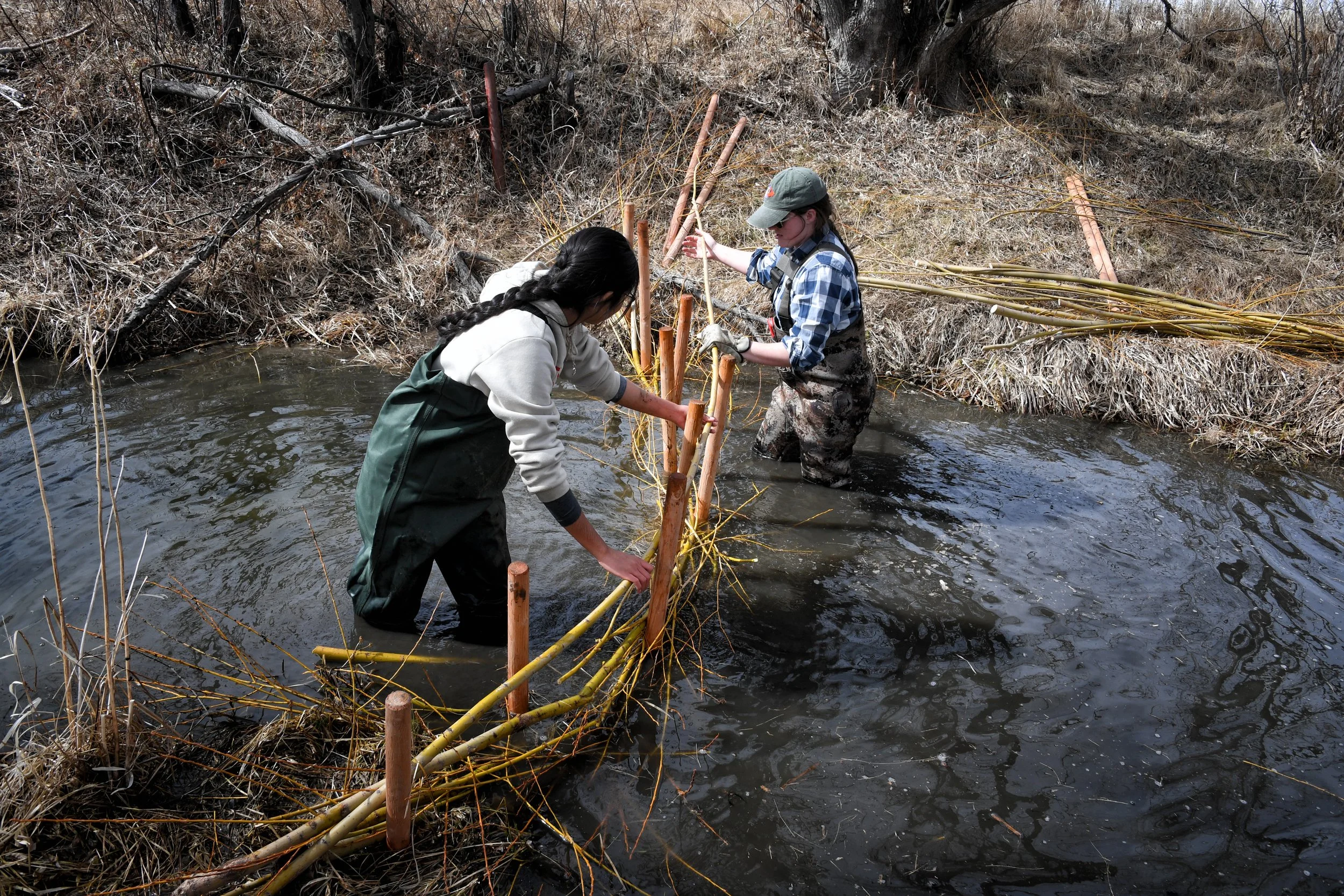
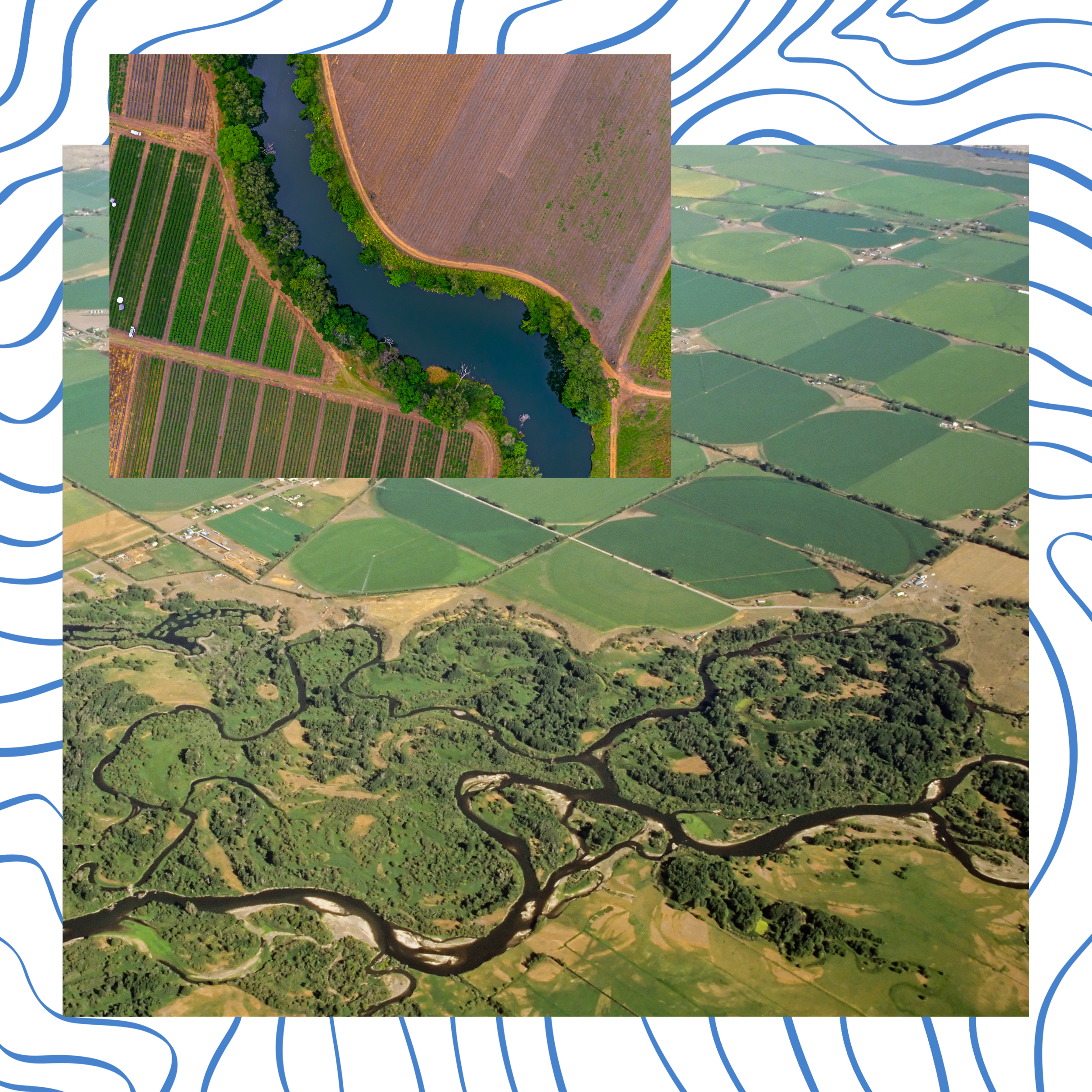
A riparian area is the space alongside the edges of creeks, streams, and rivers. Riparian zones are critical habitat for hundreds, if not thousands, of species in the Northern Great Plains. Often called “emerald islands” due to their distinctive green color in dry summers, these areas are typically the only source of forage, cover, and climate protection in a landscape dominated by commercial and conventional agriculture.
Why do we focus on riparian areas?
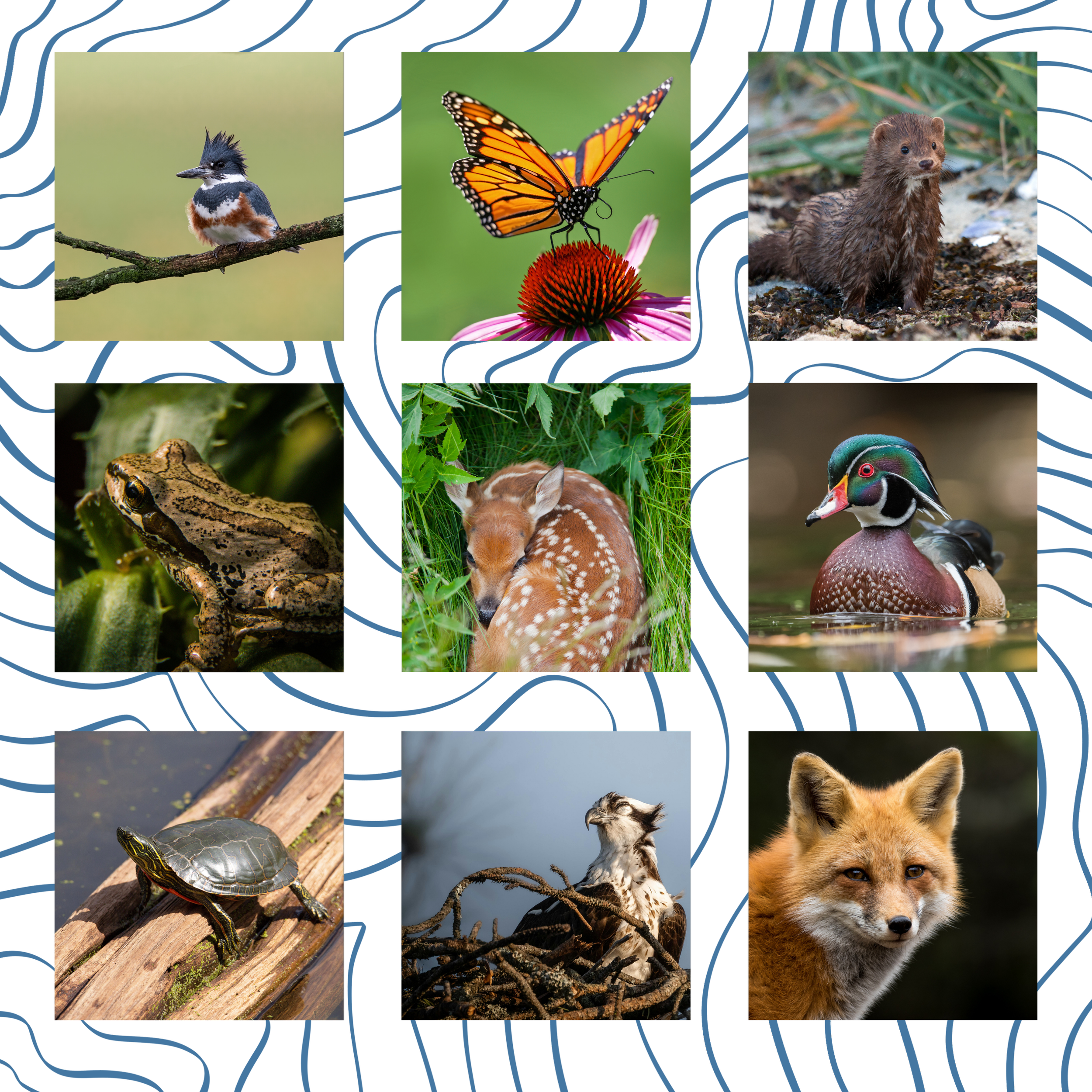
Almost every species that resides on the Great Plains relies on riparian areas. Aquatic species, naturally, rely on the health of riparian areas to maintain water quality, but other species are also dependent upon them. Both in the water and on land, healthy riparian areas support vegetation that provides nutrients for the soil, habitat for insects, forage for wildlife, cover for prey, perches for predators, nesting sites, soil stability, and shade (to name only some benefits). These thin strips act as microclimates on the plains (often several degrees cooler in the heat of summer) and their high moisture and increased localized humidity act as buffers for wildfires— critical services for wildlife and humans in the face of a changing climate.
How do we restore riparian areas?
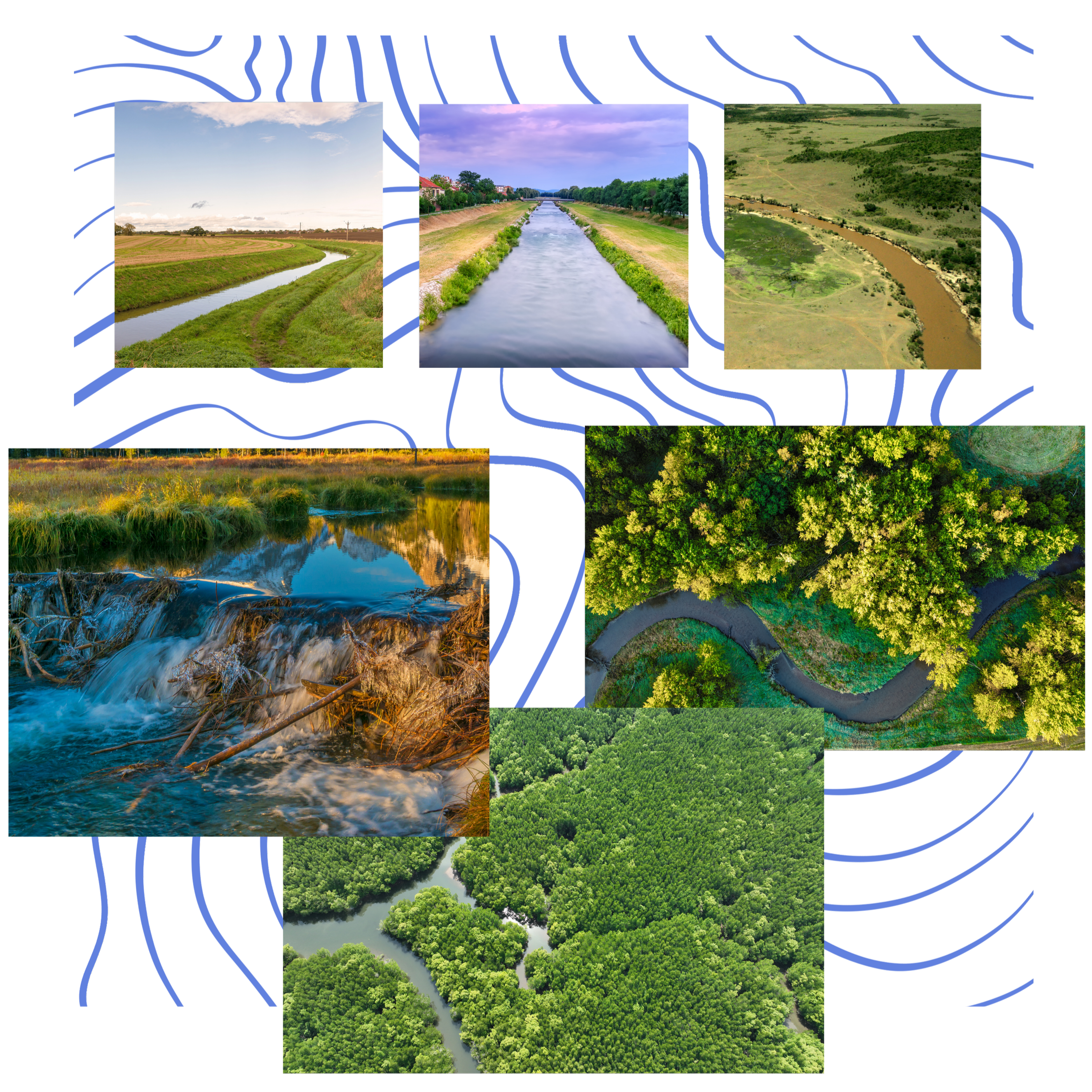
Healthy streams are braided (or sinuous) with lots of vegetation around them and “woody debris” or other natural structures that create eddies, pools, and different currents. The straight, single channel streams most commonly seen on the Great Plains lack complexity. The more complex a stream, the more variation there is in depth, flow, and temperature, which creates more habitat, benefits biodiversity, and improves local climate resiliency. We can restore riparian areas and streams by mimicking the traits of healthy, natural streams: vegetation, room to meander and branch, woody debris, and beavers.
Why beavers?
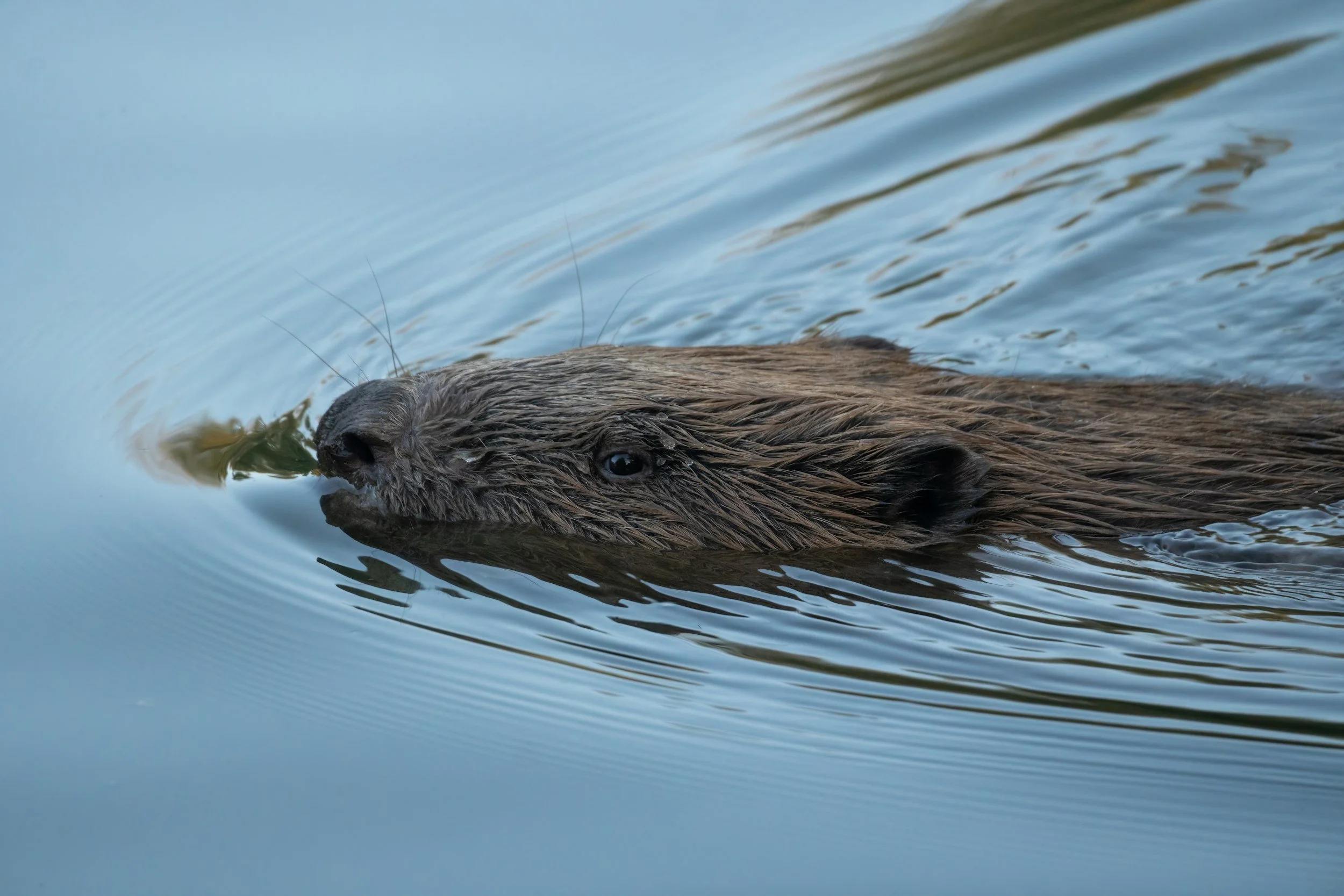
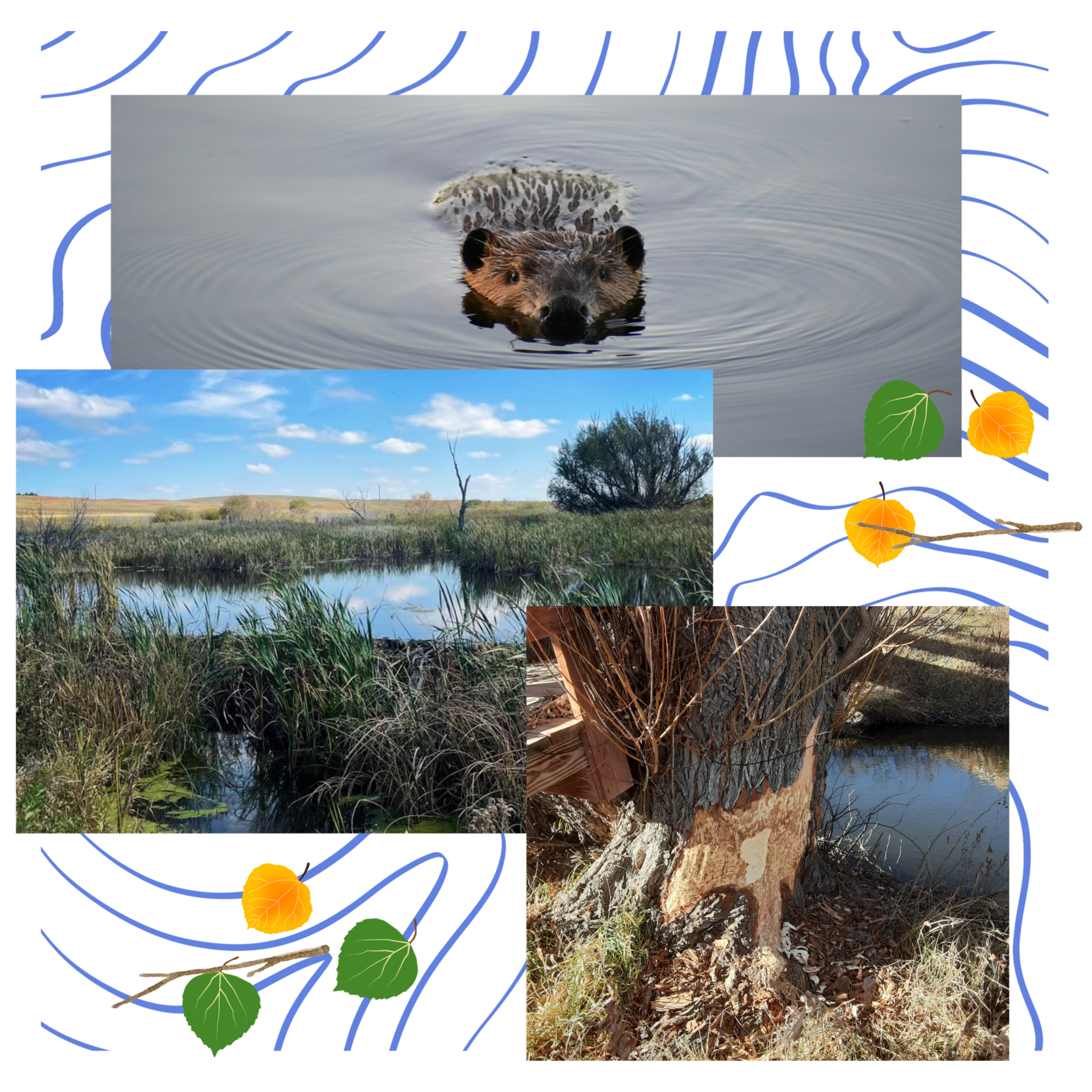
Beavers (Castor canadensis) are a keystone species, meaning they benefit and impact all of the other species in an ecosystem. Their dams, though often destroyed by people, create important habitat for aquatic and terrestrial species. Beaver ponds offer deep water habitat for fish, amphibians and wetland birds. The water stored in beaver ponds helps regulate temperatures and raises the surrounding ground water— a very important piece of the survival of trees and other taproot species. Their dam complexes act as sponges, slowing down currents, encouraging water to “meander” through a landscape, and acting as filters for pollutants. Even their habit of chewing trees can benefit an ecosystem! Species such as willow respond well to beaver damage and will send out new shoots from the base of their trunks after being cut (something humans mimic through coppicing). Restoration structures such as Beaver Dam Analogs (BDAs) and Post-assisted Log Structures (PALS) are simply human attempts at mimicking beavers and nature.
Want to Learn More?
Here are some resources commonly used by conservation professionals when approaching riparian restoration projects:
Riverscapes Consortium: Low-tech Process Based Restoration (One of the best guides out there!)
Guide: Understanding Western South Dakota Prairie Streams: A Guide to Stream Health, Classification, and Management compiled and created by SDSU Extension, the Nature Conservancy, and NRCS
Video: Beavers and Wildfire (A Stop-motion Story by Emily Fairfax)
Video: Want to Solve Wildfires and Drought? Leave it to BEAVERS! PBS Terra
Video: How Beavers Can Fully Revitalize a Farm Mossy Earth (UK)
Book: Eager (The Surprising Secret Life of Beavers and Why They Matter) by Ben Goldfarb
Past Projects
Each of these projects took place on a partner incubator hub farm located in Porcupine, SD.
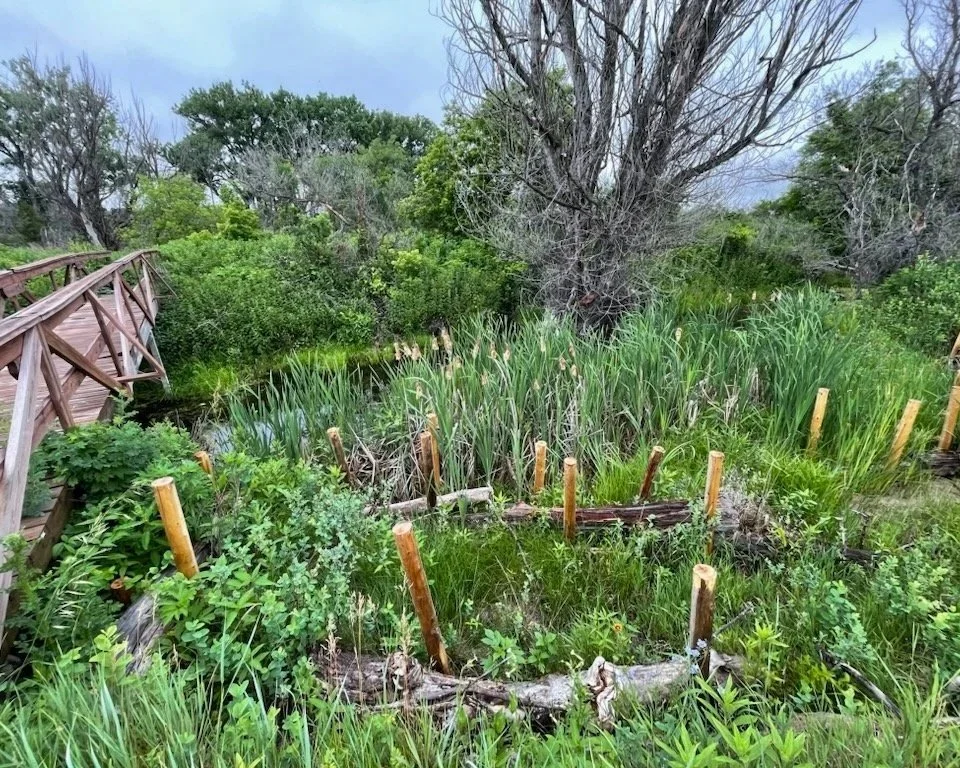
AFTER (Summer 2024)
The erosion has slowed significantly, plants have re-established in the bare soil, and rate of flow significantly decreased during intense flooding events. Anecdotally, the area has seen a noticeable increase in tadpoles and fish in the area, as well as an increase in plant diversity.
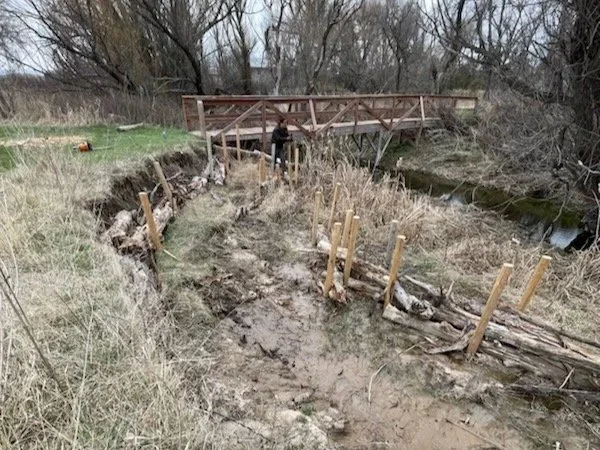
BEFORE (Spring 2024)
Severe bank erosion due to lack of plant growth and stream incision. A modified version of Post-assisted Log Structures (PALS) were installed in the area with the greatest erosion using untreated fence posts and downed trees gathered from the property.
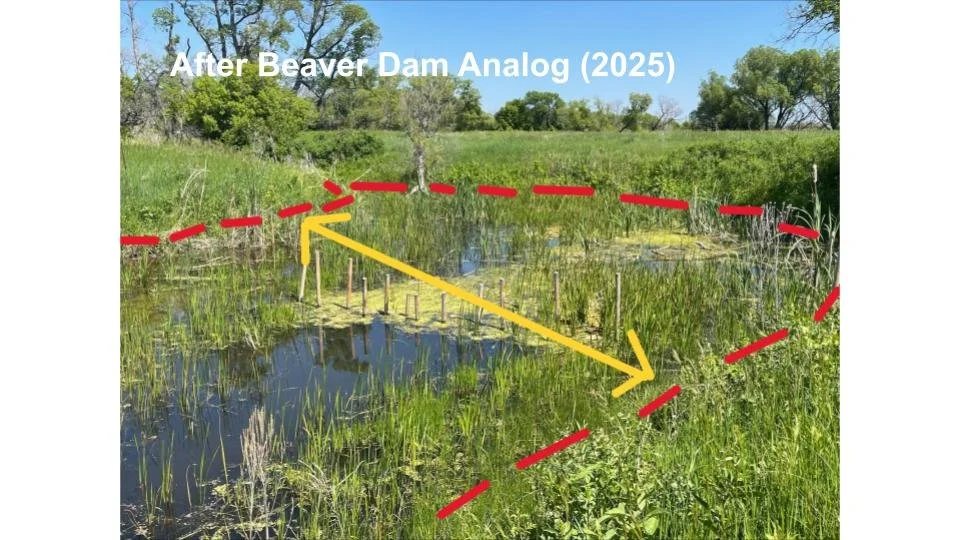
AFTER (2024)
After the students of OLC’s Bridge Program installed a Beaver Dam Analog (BDA), in only a matter of days (with no major rain events) the stream channel widened. Sediment and vegetation built up against the BDA and slowed the flow of water significantly, creating a deeper channel and providing more habitat for aquatic species. The yellow arrow marks the new width of the stream and the width of BDA is roughly the width of the original channel.
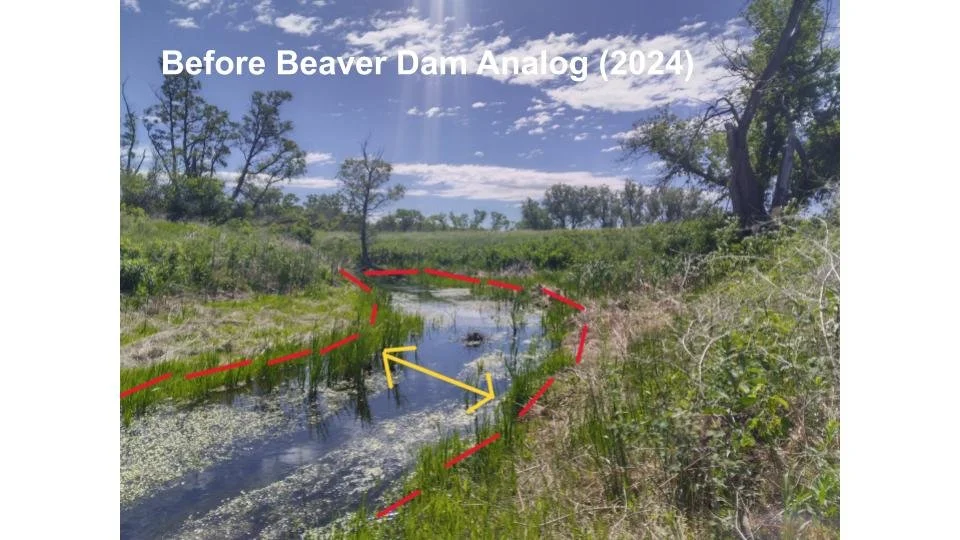
BEFORE (2024)
This section along the creek was only a few feet deep and narrow (yellow arrow is approximately 8 feet long). The features of this creek were quite typical for a “semi-healthy” stream in the Northern Great Plains. Red dashes mark the edge of the water.
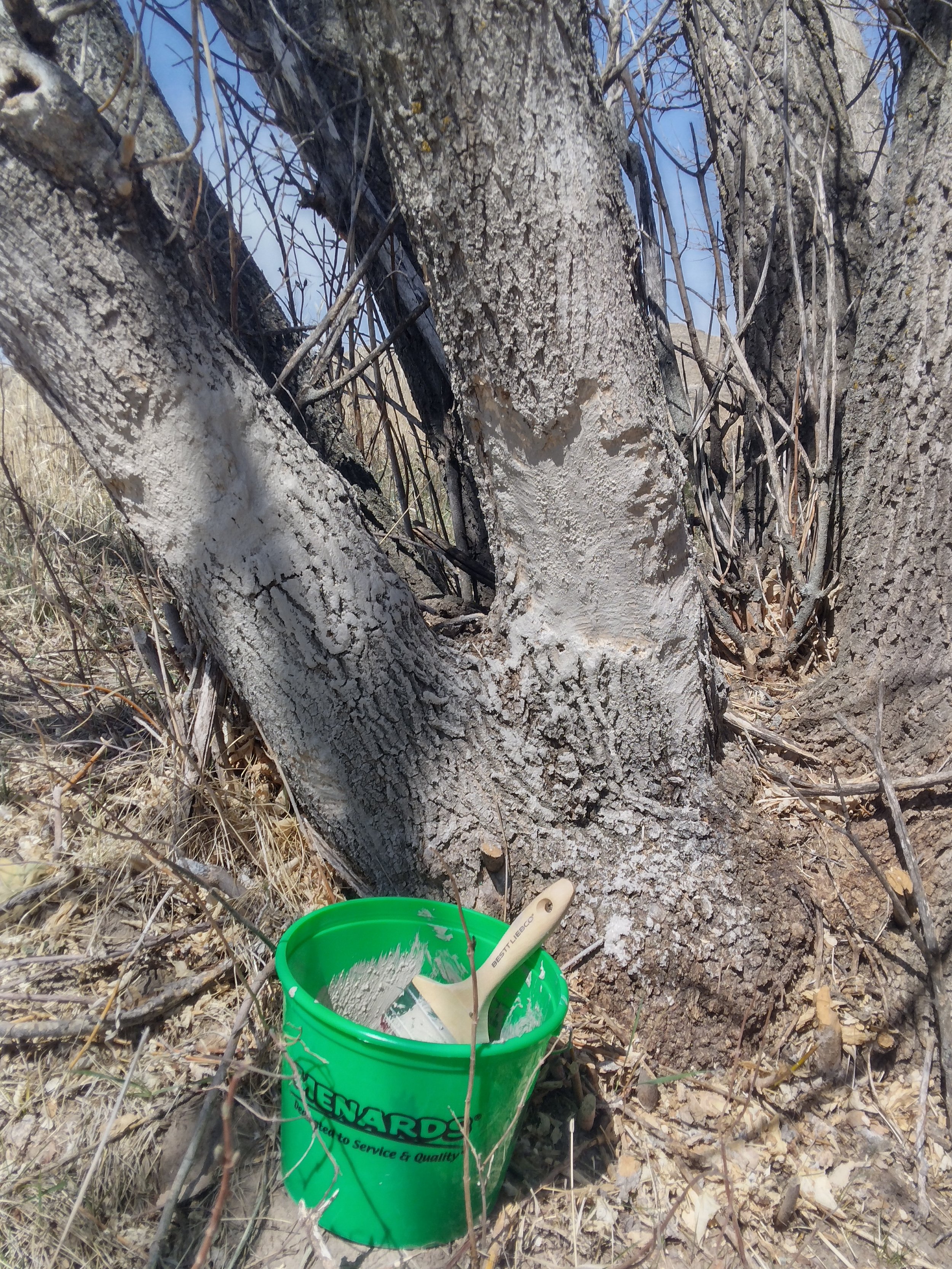
AFTER
We mixed 20 oz of masonry/play sand to 1 gallon of latex paint and applied it to the base of damaged trees. The texture of the sand against their teeth discourages beavers from chewing further and helps protect this elm from any future damage. Matching the paint color to the bark helps reduce the visibility of the damage! Note: this picture only shows the damaged areas painted— the entire base of the tree needs to be painted for this method to be effective!
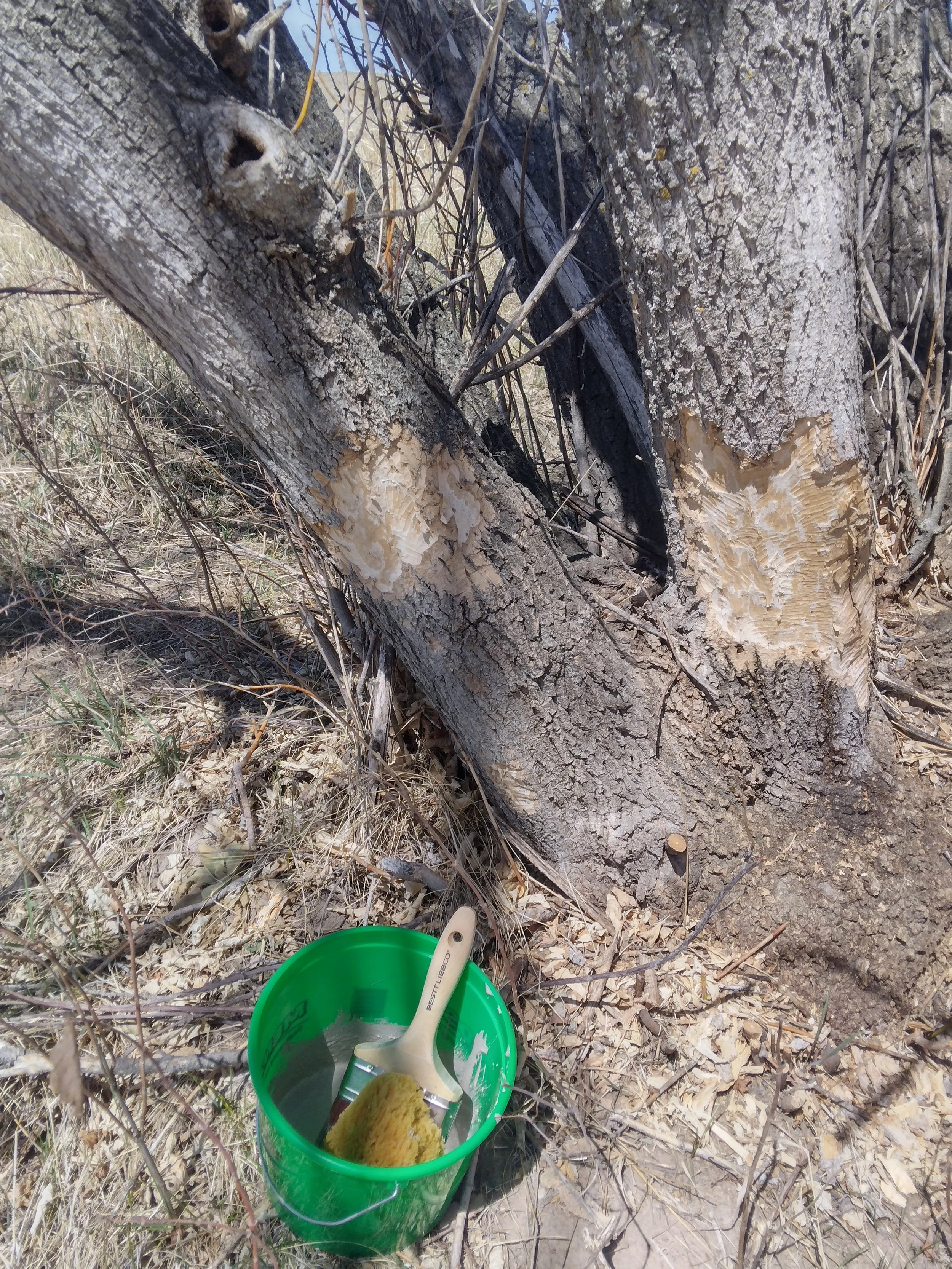
BEFORE (2025)
Local beavers had started causing significant damage to the bark of this American Elm. Beavers typically favor species such as willow, aspen, and birch for food sources but will often chew the bark of larger “less desirable” species to help wear down their ever-growing teeth.
Interested in getting involved?
Please contact us if you’re interested in volunteer or partnership opportunities!